


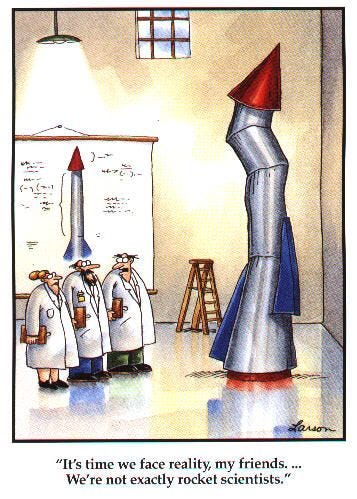
I would like to know when the meeting was held. Not because I object to meetings. I spent enough of my working life in them to understand their important role in preventing actual work from occurring. I would simply like to see the minutes from the particular meeting at which everyone apparently agreed that I was no longer competent. There must have been a motion. Perhaps somebody seconded it. I assume coffee was served. Somewhere between my fifty fifth and seventy fifth birthdays, without consultation, notification or even one of those useless online surveys asking me to rate the experience, society quietly downgraded my account from Fully Functioning Adult to Elderly Person Who May Require Assistance Opening PDF Files.
Nobody told me. That is the clever part. There is no ceremony. Nobody arrives at the house and takes away your power tools. Your driver’s licence does not suddenly say MUST BE SUPERVISED BY SOMEONE WITH TIKTOK. You simply begin noticing small changes in how people talk to you. The pharmacist starts explaining the label. Take one tablet twice daily. Yes. I gathered that from the words “take one tablet twice daily.” With food. Yes. Preferably at approximately the same time. Thank you. Before this conversation I had been planning to take all thirty pills next Tuesday with a bottle of Burgundy. The voice is different too. Not quite louder. Slower. Kinder. The voice people use when explaining airport security to a Labrador.
Young people have begun explaining technology to me, which is particularly entertaining because I spent much of my working life watching technology overturn entire industries while executives stood around wondering whether the internet was perhaps a fad. I worked through mainframes, personal computers, networks, email, the internet, digital platforms, smartphones, cloud computing, artificial intelligence and approximately seventeen thousand corporate technology revolutions, each of which was going to “change everything” until the next one arrived eighteen months later and changed everything again. But apparently I am now confused by QR codes.
A twenty seven year old recently explained artificial intelligence to me with the solemn authority of Marie Curie describing radium. “You have to understand, AI learns from information.” Really? Fascinating. And automobiles move because the round things underneath them turn. I am particularly amused by the assumption that younger people are technologically competent merely because they are younger. They are technologically familiar. That is not the same thing. A six year old can operate an iPad. This does not make him Steve Jobs. It means Apple successfully designed a product that can be operated by someone who still occasionally needs assistance wiping his ass.
Ask many twenty five year olds to configure a network, diagnose why a printer is refusing to communicate with a computer, replace a hard drive, explain what an operating system actually does, or recover something that has disappeared from the cloud and suddenly the technological master race is standing in the kitchen whispering, “Maybe restart it?” Thank you, Alan Turing.
There is, however, one place where the natural order has not merely survived but produced a delightful administrative anomaly. Sharon is older than I am, which means that in our house I remain the young person. This is not a distinction I take lightly. Outside the front door, society may regard me as one poorly chosen password away from digital catastrophe, but inside the house I am Technical Support. I am the Help Desk. I am the Department of Information Technology, although the department consists of one elderly Belgian in his slippers saying, “What did you press?” Sharon can hand me a phone displaying something she has never seen before and I immediately acquire the swagger of a twenty seven year old explaining artificial intelligence to me. “Give it to me,” I say, thereby completing one of life’s more satisfying circles.
Being Sharon’s de facto technical support also allows me to observe how quickly expertise becomes relative. I do not actually have to know very much. I merely have to know slightly more than she does at that particular moment. This is essentially how the entire consulting industry was built. Sometimes I fix the problem by changing a setting. Sometimes I find the missing email. Sometimes I reconnect the printer. And sometimes, after several minutes of staring thoughtfully at the screen while pretending to understand what has happened, I turn the device off and turn it back on again. When it works, Sharon looks at me as though I have personally restored electricity to Ontario. I accept this admiration without explaining that rebooting remains the technological equivalent of hitting the side of the television in 1972.
The arrangement has another advantage. Whenever one of my children comments on my alleged lack of technical prowess, I can point out that I am currently responsible for the technological wellbeing of an entire other human being. I maintain devices. I troubleshoot applications. I recover passwords. I explain why the television suddenly has subtitles in Portuguese. I am, by household standards, practically IBM. This may not impress my grandchildren, naturally. They are ten. To them, watching me type a password is probably like watching a medieval monk illuminate a manuscript. But I take comfort in knowing that my children are now experiencing precisely the same contempt from their children that they once directed at me, except much earlier. At least mine waited until fifteen or eighteen before deciding I was technologically useless, not least because I was still buying the technology. Their children have dispensed with that courtesy entirely. They are mocking their parents at ten, using devices their parents paid for. Civilization may be declining, but efficiency has improved.
But nowhere has my apparently accelerating incompetence been more carefully monitored than by my children. This is especially irritating because I remember my children before they became experts. I remember teaching them how spoons worked. There was a period when I was personally responsible for preventing these people from inserting metal objects into electrical outlets. I taught them to cross streets. I bought bicycles and showed them how to ride them. I explained money, driving, cooking, telephones, computers and why licking something merely because another child dared you to was not a sound basis for decision making.
And, crucially, I bought the technology. This point has somehow disappeared from the historical record. My children did not mock my technological incompetence when they were ten because I owned the technology. I was the venture capitalist. They could have opinions about my computer skills when they had saved enough money from delivering newspapers to purchase a $2,000 computer. Until then, Bill Gates and I were running the show.
They generally waited until fifteen or eighteen before concluding that I knew nothing. This is the natural intellectual development of the teenager. At twelve, Dad knows quite a lot. At fourteen, Dad’s knowledge becomes questionable. At sixteen, it becomes astonishing that Dad has survived this long without teenage supervision. By eighteen, the child has concluded that virtually everything Dad believes is the product of an earlier and embarrassingly primitive civilization.
Then something wonderful happens. They have children. And God, who may not involve Himself in every human affair, apparently maintains a small department devoted exclusively to revenge. My children are now being mocked by their children. And their children are not even waiting until fifteen. They are ten. Ten year olds are already looking at their parents with the weary contempt once reserved for people who believed the Earth was flat. “No, Mom. You don’t do it like that.”
I cannot adequately describe the pleasure this gives me. Actually, I can. It is magnificent. I watch my children being instructed by their own children on how to use devices, apps, games and assorted digital nonsense, and I make absolutely no attempt to defend them. Why would I interfere with nature? This is generational justice occurring before my eyes. Occasionally one of my children looks at me during these exchanges with an expression suggesting that perhaps I might intervene. I don’t. I have waited thirty years for this.
Apparently the generational cycle of technological humiliation is accelerating. My generation was allowed perhaps fifty useful years before being declared obsolete. My children got thirty. Their children may be technologically irrelevant by puberty. Somewhere in 2042, an eight year old will be explaining neural implants to his twelve year old brother and asking whether people his age should still be permitted to operate household appliances unsupervised.
But technology is merely the most visible part of something much stranger. At some point, assumed competence moves. When you are forty five, the default assumption is that you know what you are doing unless you demonstrate otherwise. When you are seventy, the default assumption increasingly becomes that you may not know what you are doing until you prove that you do. That is an enormous change, and nobody announces it.
Your children begin asking whether you should be on the ladder. I have been climbing ladders since before they were born. I have painted houses, repaired things, cut trees, moved furniture and performed countless household tasks involving gravity without requiring helicopter evacuation. But now I am three rungs up replacing a light bulb and suddenly there is a family inquiry. “Should you be doing that?” Doing what? “Being up there.” Up where? The ceiling of Notre Dame? I am six feet above the carpet. “Just be careful.” This is another phrase that arrives with age. Be careful. As though until now I had been approaching ladders with the carefree abandon of a Cirque du Soleil performer.
My children inspect my driving too. They sit beside me differently now. They used to fall asleep. Now they monitor. A hand occasionally moves toward the dashboard. “Dad.” What? “That car.” Yes. I saw the enormous automobile directly in front of me. “I was just making sure.” Thank Christ. Without you I might have continued driving directly through it.
The insult is not that they care. I know why they care. I love them for caring. The irritating part is the quiet assumption beneath the concern, that some invisible process has begun in which my judgement, balance, memory, reflexes and understanding of the world are gradually being transferred to them. And the bastard of it is that eventually they will be right. That is what makes this difficult to dismiss entirely.
There probably will come a day when I should not climb the ladder. There may come a day when my driving is no longer what I think it is. There may come a day when some new technology genuinely leaves me baffled. There may even come a day when one of my children explains something to me and I realize, with considerable irritation, that I actually needed the explanation. But we have developed a peculiar habit of treating the possibility of future incompetence as evidence of present incompetence. Grey hair has become circumstantial evidence. Age itself is apparently probable cause.
The absurdity is that while certain abilities may decline, other forms of competence accumulate. I may not know the newest social media platform, largely because I have successfully avoided developing an interest in watching strangers dance in kitchens. But I know things I did not know at thirty. I know when someone is lying to me. I know when a negotiation is going badly before the other side realizes it. I know the difference between an emergency and an inconvenience. I know that most supposedly catastrophic problems become less catastrophic after lunch. I know when an expert is actually an expert and when he merely owns an impressive PowerPoint template.
That knowledge does not show up on a phone screen, so it is easily discounted. Experience has a terrible marketing department. Novelty, meanwhile, has hired influencers. We have confused speed with intelligence, familiarity with competence and youth with relevance. The person who can navigate an app three seconds faster than I can is presumed to understand the future. The person who has watched four previous versions of that future arrive, dominate, collapse and get replaced is told where to click.
There is something deeply funny about that. Also something slightly dangerous. Because every generation eventually becomes the generation being explained to. My children are discovering this approximately twenty years earlier than they expected. Their ten year olds are already circling. The corrections have begun. The sighs. The eye rolls. The tiny hands reaching across the table. “Give it to me.” That may be my favourite. Give it to me. The universal declaration that the previous generation has become too stupid to continue operating the device.
My children once said it to me. Now their children say it to them. And one glorious day, assuming civilization survives long enough, those grandchildren will be sitting somewhere trying to activate whatever device has replaced the human brain when a child will lean over and say, very slowly, “No, Grandpa. You have to think at it twice.” Grandpa will bristle. “I know how to use it.” The child will sigh. “Just give it to me.” And somewhere, if the universe has even the smallest sense of humour, I will be dead and still laughing.
Because competence was never actually transferred from one generation to another. Intelligence did not migrate from my brain into my children’s brains when I turned sixty five. What transferred was the assumption of competence. Society simply changed who received the benefit of the doubt.
That is the part worth resisting. Not ageing. Ageing will proceed quite efficiently without our cooperation. Not help either. There is no nobility in falling off a ladder simply to prove you can still climb one. The thing worth resisting is premature surrender of authority over your own life merely because younger people have begun speaking to you slowly.
So I have developed a policy. If I need help, I will ask. If I am about to do something genuinely stupid, by all means intervene. If I am driving toward Lake Ontario while insisting the GPS is wrong, take the keys. But if I am standing on the third rung of a ladder, reading the instructions on my medication or taking four additional seconds to find something on my phone, perhaps allow for the possibility that the old man still knows what he is doing.
And children, before commenting on my technological abilities, might remember one small historical detail. I bought your first computer. I bought your first phone. I paid for the internet connection you used to discover that I knew absolutely nothing.
And now your ten year olds think you’re idiots. I have rarely seen an investment mature so beautifully.
If I May… One last thing. Since I am apparently approaching the age when society expects me to become increasingly useless, I would like to remain useful for as long as possible. I write these essays for free, and I intend to keep doing that. If one made you laugh, think, swear, or reconsider speaking very slowly to someone with grey hair, perhaps throw a few dollars toward something considerably more important. My daughter Ashley is a NICU nurse, and we are raising money to help her hospital buy two bassinets, each costing roughly $30,000, because apparently even arriving on Earth prematurely has become an expensive proposition. The babies will not read these essays. They will not care about my opinions. They will certainly not understand my problems with QR codes. They just need a safe place to begin. That seems a pretty decent use for whatever usefulness I have left.
If you are able, the donation link is below. Every contribution, no matter the size, helps give a newborn the chance to grow up and one day argue about something much more sensible.
The essays will remain free. The bassinets, unfortunately, are not.
Others’ response to the aging process continues regardless of your ability to live a perfectly normal, happy life. If you think younger people are annoying now, wait until you’re 93. No matter how competent I may be, those 40-70 age people insist on “helping” me; they don’t hear me say “I will let you know when I need help.” I know they are trying to be helpful but, sometimes, all I want is to be left alone with my dog and an audiobook!
So true! I quit dying my hair when I retired. It amazed me that the grey hair weakened my mind and body. Within weeks younger people were speaking to me slowly, sympathetically, and making sure doors were opened for me.
😆